 DIGITAL
AI for Small Business: 5 Practical Uses Beyond Chatbots
When we discuss AI for small business, we start with the work: which task keeps repeating, takes too much time or needs several people to keep it moving?
That gives us somewhere useful to begin. You do not need to arrive with a technical solution. Tell us where the work gets stuck, and we can explore whether AI, automation or a simpler process would help.

5 practical ways to use AI in your business
1. Filtering information
If your team reads through messages, forms or documents to find the same details, AI can help extract and organise them. For example, it could separate a customer’s requested service, location and timing into fields your team can review.
The aim is to make useful information easier to find, rather than asking someone to read everything again.
2. Gathering what a customer needs
An enquiry often arrives without enough information to act on. A guided AI conversation can ask agreed questions, then prepare a brief for your team.
For a property enquiry, that might include the preferred area, budget and whether the person wants to rent or buy. Your team starts with context instead of repeating the same opening questions.
3. Preparing product updates
When supplier information changes, AI can help turn approved details into consistent product descriptions or proposed catalogue updates.
Prices, specifications and availability should come from your source records. AI should not fill missing product facts with guesses. A person can approve changes before they reach customers.
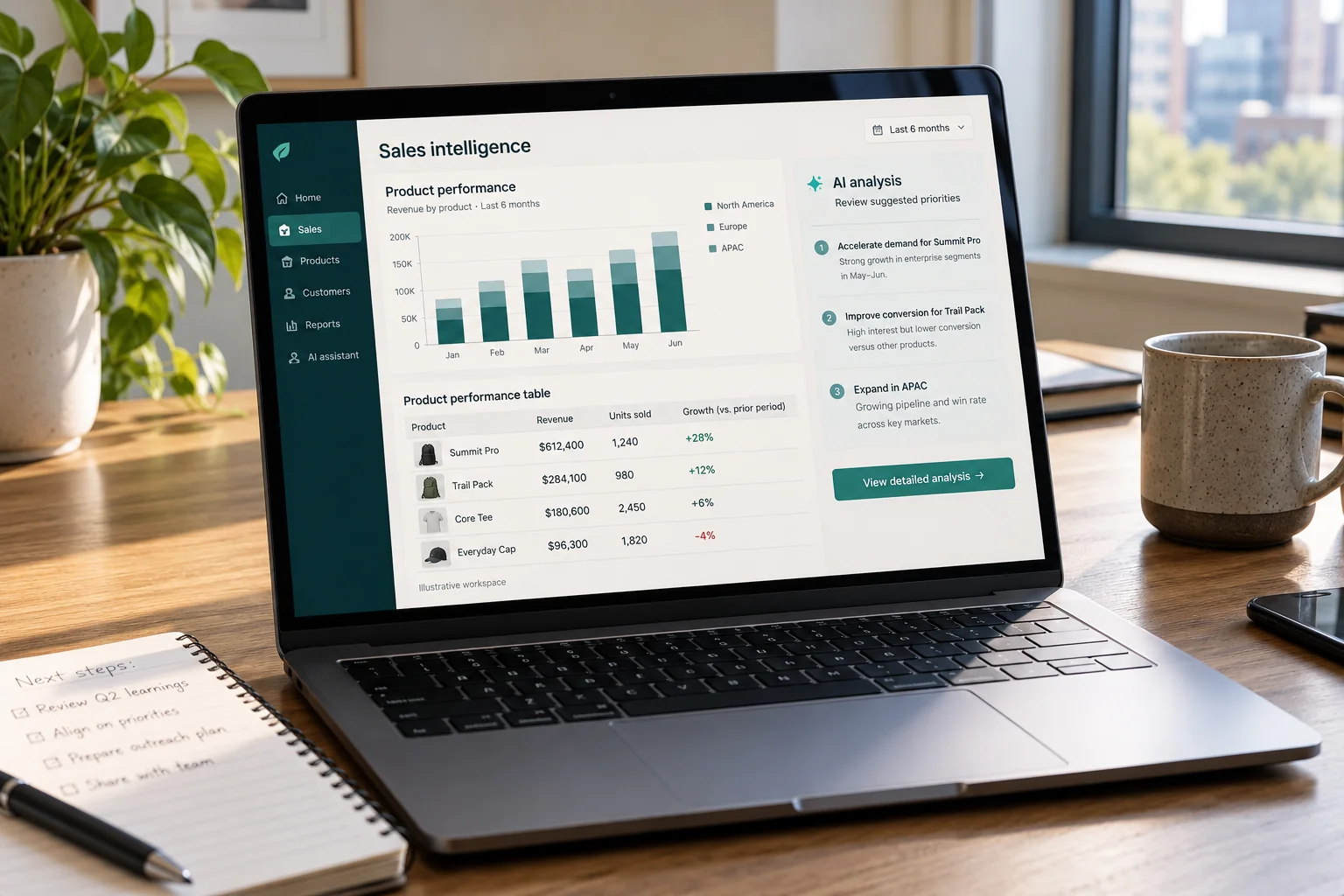
4. Organising daily sales and costs
AI can help extract information from receipts and describe patterns in sales records. Connected software can calculate totals and prepare summaries for review.
This can reduce repetitive preparation, but the figures still need checking against your records. Your accounting system and the person responsible for the accounts should remain the reference for financial decisions.
5. Finding products worth promoting
Your bestseller is not necessarily your most profitable product. With reliable sales and cost data, a workflow can compare sales volume, margins and stock, then help your team identify products worth considering for a campaign.
AI can also draft campaign ideas from that analysis. Your team decides whether the recommendation makes commercial sense.
AI workflow automation: a property listing example
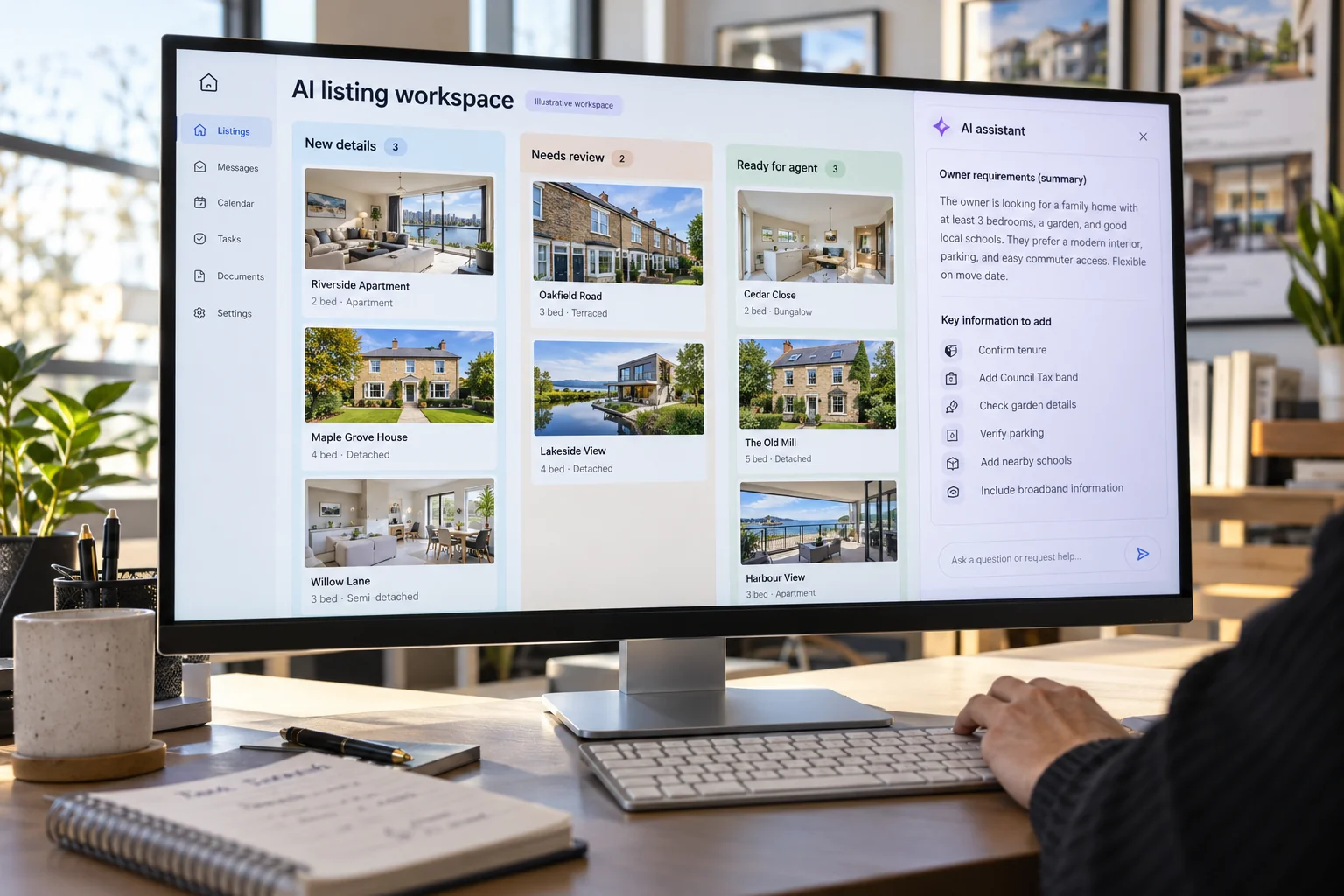
We have built an AI solution to support property agents reaching owners about selling or renting their properties, alongside managing the listings.
The problem was repetitive contact work. Reaching owners one by one takes time and energy that an agent could spend on conversations needing their attention.
That is a useful way to think about AI: improve a defined part of the work, rather than expecting it to run the whole business. For an outreach workflow, the contact list, message rules and handover to the agent need to be agreed as part of the setup.
Common questions
Can one AI system solve every problem in my company?
Usually, different problems need different workflows, data and connections. Some can share a system, but each task still needs a clear scope. Start with one useful job before expanding.
Is AI always cheap to implement?
A basic tool subscription and a tailored business workflow are different things. Setup, connections, testing and ongoing usage affect the cost. Define the task first so the solution matches the work involved.
How should a small business start using AI?
Replying to common enquiries is often a manageable first step. Begin with approved answers and a clear handover when a question needs a person. Check whether it saves staff time while keeping replies accurate and useful.
Bring us the problem
You do not need to know which AI tool to choose. Tell us what repeats, who handles it now and what you want to improve. Explore our business AI solutions and automation or talk through your workflow with us.